Is American Cruise Lines Worth It? A Small Ship Cruise Cost and Value Breakdown
Hi friends, Cheryl here from Yellow Umbrella Travel! Since 2009, our team has specialized in river and small ship cruise travel, including Viking, AmaWaterways, and Silversea, and we plan every trip at no cost to you. The cruise line pays our commission, so you pay the same rate you’d pay booking directly. Today I’m stepping outside our usual partner brands to answer a question we get constantly from clients considering a small ship cruise: is American Cruise Lines worth it?
If you’ve read our first two posts about our Grand New England cruise (Part 1: What We Packed and Booked, Part 2: Port by Port), you already know exactly what we paid: $34,006.60 total for two people, fifteen nights, including flights, splurges, and every lobster roll along the way. Short answer to today’s question: yes, for us. But “yes” deserves math behind it, because $34,000 is a real number and you deserve a real comparison, not just a happy customer telling you to trust her.
Quick answer: American Cruise Lines’ Grand New England cruise fare works out to $976.67 per person, per night. That’s higher than Viking’s ocean-fleet New England fare, but once you account for what’s actually included (gratuities, all beverages, shore excursions, and a pre-cruise hotel night), the gap narrows considerably, and you’re comparing a true small ship cruise to a 1,000-guest ocean ship, not the same experience at all.
One more note before we dig in: we’re not “budget” travelers. We look for value, but not usually the lowest price. We value quality, service, and experience over price, so if you’re a strict “lowest price wins” traveler, this comparison may not speak to you the same way.
The Number Everyone Wants to Know: Cost Per Day
Our full total includes a lot of optional spending: massages, an independent puffin cruise, a ship model we didn’t need but wanted, a Jeep rental that was purely for fun. Strip that out and look at just the cruise fare itself: $29,300 for two people for fifteen nights in a mid-level upgraded suite. That works out to $976.67 per person, per night. I broke this trip down, in depth in the previous blog post.
I know how that number might land at first. So let’s put it next to what the other major name in U.S. small ship cruising charges for a comparable itinerary, once you look past the marketing and at what’s actually included.

How American Cruise Lines Compares to Viking's New England Cruise
If you’ve researched river cruise or small ship cruise options in the U.S. at all, you’ve probably come across Viking. As a Viking river cruise agent, we know their Mississippi river ships are consistently well rated, so it’s a fair question: how does American Cruise Lines’ Grand New England itinerary stack up against what Viking offers on this same coastline?
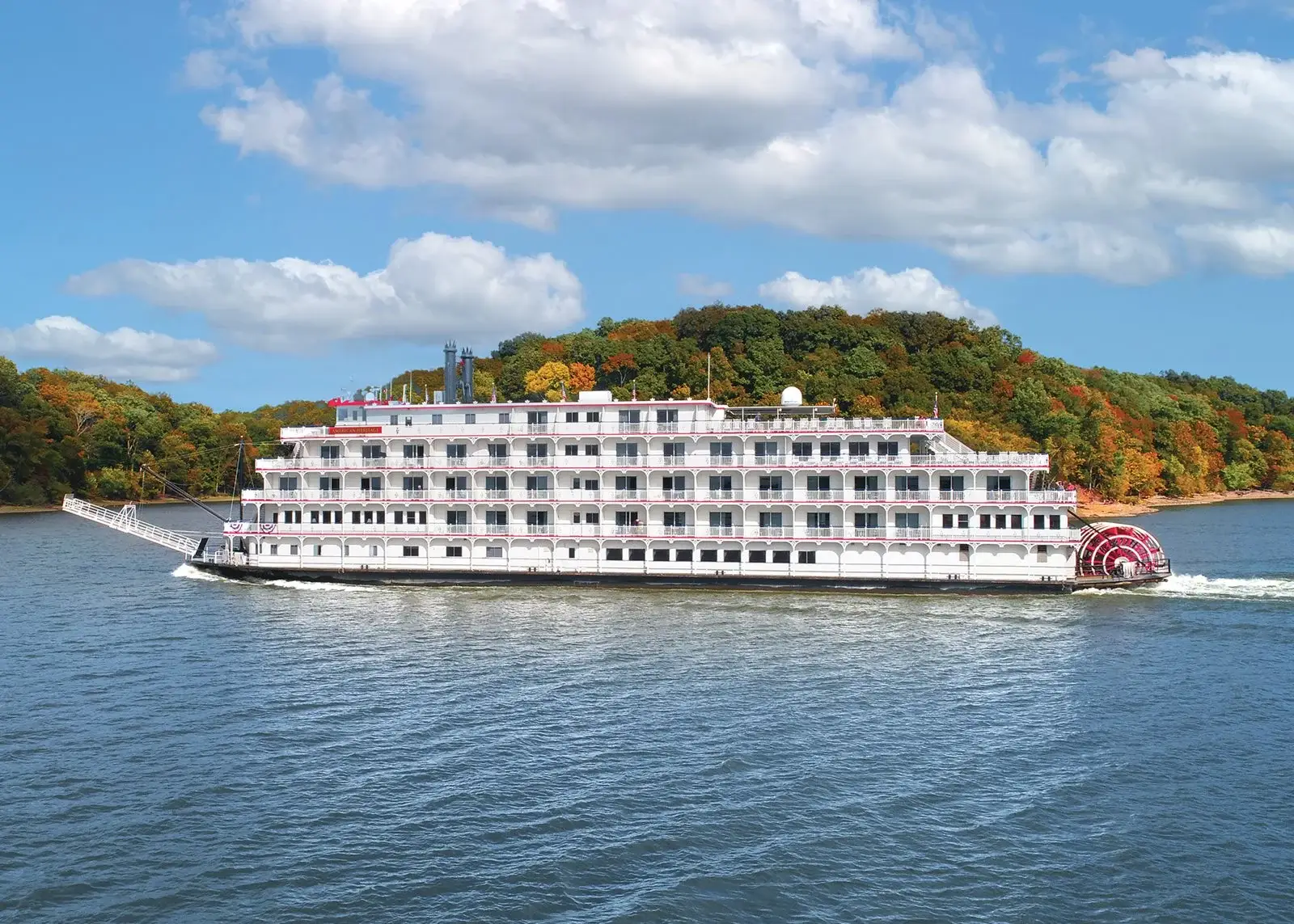
Here’s where the comparison isn’t quite apples to apples. Viking doesn’t run a true small ship product in New England the way American Cruise Lines does. Their New England itinerary, “Canada & New England Scenic Shores,” sails on Viking’s ocean fleet: ships that carry close to 1,000 guests, on a route from Montreal to Fort Lauderdale rather than a Boston round trip. That means it crosses into Canada, which means a passport, and it means a considerably larger ship than the 150-passenger vessel we sailed on and loved.
Let’s be upfront about price, since that’s the whole point of this post: Viking’s fare for that itinerary starts around $8,299 per person, which works out to less per night than what we paid American Cruise Lines. We’re not going to pretend otherwise. But that starting number is Viking’s lowest stateroom category, and it doesn’t include gratuities, a pre- or post-cruise hotel night, or full alcoholic beverages beyond beer and wine at meals, all of which are already part of the American Cruise Lines fare. Add those back in and the gap narrows, though it doesn’t close entirely. If the lowest possible per-night rate is your deciding factor, Viking’s starting fare wins on paper.
What it doesn’t win on is the experience itself, and that’s really what this comparison comes down to. American Cruise Lines can look expensive next to a big ocean cruise, but whether it’s worth it for you comes down to what kind of cruise you actually want. A small ship, personalized cruise experience will always carry a higher price point than a mass-market ocean cruise built around volume.
Category | Viking (Canada & New England Scenic Shores) | American Cruise Lines (Grand New England) |
|---|---|---|
Ship size | Ocean ship, up to ~1,000 guests | Small coastal ship, roughly 150 guests |
Itinerary | Montreal to Fort Lauderdale, includes Canada | Boston round trip, 100% U.S. ports |
Passport required | Yes | No |
Gratuities | Not included | Included |
Alcoholic beverages | Not included (beer and wine with lunch/dinner only) | Included, all day |
Pre/post-cruise hotel | Not included | Included |
Shore excursions | One complimentary excursion per port | One or more included every day |
Port access | Larger ports; tendering or bus transfer into town common | Docks directly in smaller harbors, often walkable into town |
Airfare | Not included | Not included |
So if a small, intimate ship exploring New England up close is what draws you to Viking, American Cruise Lines is the closer match for this specific region, not the lower price tag. Viking’s small ship strength shows up on the Mississippi and the Rhine and Danube in Europe, not here. Their New England product is, at its core, a big ship cruise with Viking’s name on it. If you want a true small ship cruise experience in this particular region, American Cruise Lines is the one actually offering it.
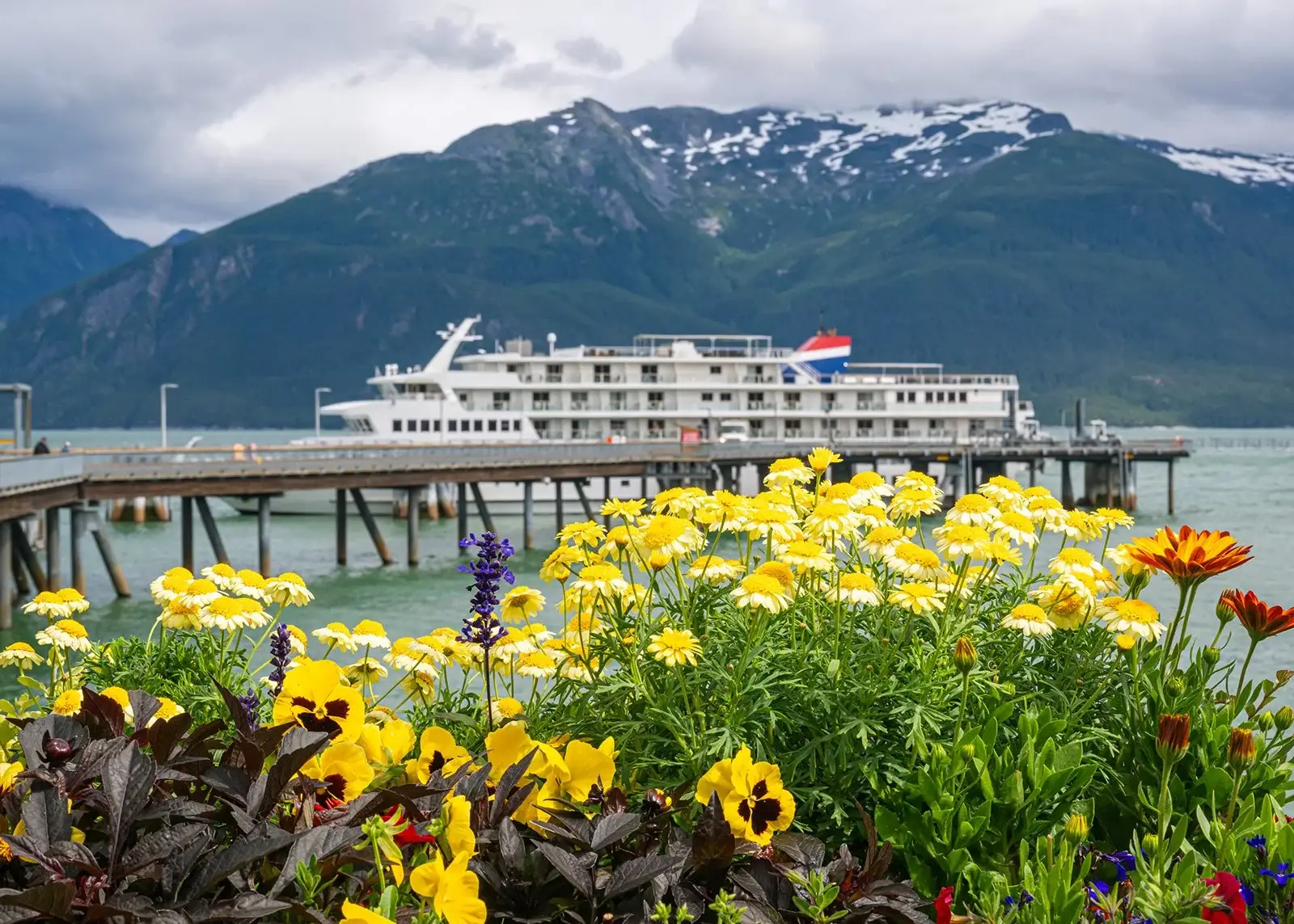
There’s a practical side too, not just the feel of it. Our ship was small enough to dock right in the smaller ports and harbors along the coast, which meant we could walk off the gangway and be in the middle of town within minutes at almost every stop. A ship the size of Viking’s ocean fleet can’t get into those same docks. That typically means anchoring offshore and tendering guests in, or docking at a larger commercial port well outside the town center and busing everyone in. Neither is necessarily a dealbreaker, but it adds shuttling and waiting we simply didn’t have on this trip. Rolling straight off the ship into Bar Harbor and Nantucket, rather than boarding a tender first, was one of the real advantages of the smaller ship for us.
A few smaller inclusions are worth mentioning too, since they add up: snacks and light bites are available 24/7, with fresh cookies put out daily at 10am and 3pm, and onboard programming includes naturalist and historian lectures specific to the region you’re actually sailing through, not generic filler entertainment.

What Fellow Passengers Told Us
This isn’t a formal survey, just what we heard onboard, but it was consistent enough to share. Many of our fellow passengers were not first-timers. We met a couple on their 28th U.S. river and coastal cruise with American Cruise Lines, and several others who’d sailed with them multiple times. Many had also tried Viking at some point, so whenever the topic came up, we asked directly how the two compared.
Every single person we asked said they preferred American Cruise Lines. The reason came up the same way almost every time: the smaller guest count. People consistently said it changed the entire feel of the trip, more like traveling with a group you actually get to know rather than blending into a crowd. Several also brought up the staterooms unprompted, describing Viking’s rooms as noticeably smaller (one woman joked that her Viking stateroom was so tight that bending over in the shower bumped the door open) and said it felt like the ships were designed to fit as many guests as possible rather than to keep things comfortable.
We didn’t go looking for this feedback expecting it to be so one-sided. But it matched everything we noticed ourselves, and hearing it independently from repeat cruisers who’d sailed both lines carried more weight with us than any marketing material could.
What Sets American Cruise Lines Apart Here
Beyond the fare structure, a few things about this trip weren’t about price for us at all.
Every port on our itinerary was American soil. No currency exchange, no wondering whether a Canadian port adds a day of paperwork, no passport to worry about. You fly into Boston, you fly home from Boston, and everything in between is Maine, New Hampshire, Massachusetts, and Rhode Island.
The ship itself is American-built and American-flagged, staffed by an American crew, on a vessel small enough that we actually got to know the people serving us and many of our fellow travelers over two weeks, not just recognized a few familiar faces in a crowd of a thousand.
Getting there was simpler too. We’ve done plenty of European river cruises, and getting to one usually means a long overnight flight, at least one layover, and often a train connection once you land. This trip was a direct flight from San Antonio to Boston: no overnight leg, no layovers, no juggling multiple airports. It cost less as a straightforward side effect of being shorter, but the bigger win was how much less travel fatigue we dealt with before the vacation even started. We landed, checked into our hotel, rested, and were exploring Boston in no time, instead of recovering from a full day of transatlantic travel.

What a DIY Land Trip in the Same Region Actually Cost Us
Two years ago, we spent five nights in Kennebunkport, Maine (this Texas girl needs to escape the heat at least once a summer). Once we added up the hotel, rental car, flights, and food and drinks over those five nights, it came to over $6,000 for the two of us, with almost no excursions built in, and every part of the trip planned by us.
Do the math and that’s roughly $600 per person, per night, for a self-managed land trip in the same region, with no activities included and every logistical decision landing on us. The Northeast isn’t a cheap place to travel, regardless of how you do it.
Now put that next to our American Cruise Lines trip at $976.67 per person, per night. That gap looks large until you remember everything the cruise fare actually buys that our Kennebunkport trip didn’t: every meal, all drinks and alcoholic beverages, snacks around the clock, shore excursions in most ports, a pre-cruise hotel night, all transfers, and someone else handling the itinerary end to end. Our land trip had none of that, and we still spent $600 a night per person just getting ourselves there and feeding ourselves.
Once you’re comparing apples to apples, a land-based Northeast vacation isn’t the budget option it looks like next to a river or small ship cruise fare, especially for a trip you have to build and manage yourself.

What You're Actually Paying For (Beyond the Brochure)
Here’s the part that doesn’t fit neatly in a comparison table but mattered more to us than any single line item: we didn’t have to run this trip. We just showed up, and it was done for us.
Every meal was handled. No back-and-forth on what’s for dinner. We unpacked once and didn’t pack and unpack at a new hotel every few days. We didn’t deal with a rental car for two straight weeks or figure out parking in thirteen different port towns. We didn’t build the itinerary, and we didn’t have to rebuild it when the weather shifted (it did), because that was someone else’s job, and they were good at it.
That’s the part a per-day price comparison doesn’t fully capture. You’re not just buying a cabin and a lobster roll. You’re buying fifteen days where the only decisions left are what to explore in each port and what to order off the menu each night. For us, that’s worth paying for.
Where the Price Doesn't Buy Everything
“Worth it” isn’t the same as “flawless,” so let’s be fair.
The crew skewed younger than what we’ve experienced on European river cruises, where staff often stay with the same ship for years. Service was warm and attentive, but that specific seasoned polish we were used to wasn’t quite there. And because this route runs along the open Atlantic rather than a calm river, the ride is noticeably less smooth than a European river cruise, worth knowing if seasickness is a concern for you.
Neither was a dealbreaker for us. But they’re real for some travelers, and we’d rather tell you now than have you discover them mid-cruise.

Frequently Asked Questions About American Cruise Lines
For travelers who want a true small ship experience, yes. American Cruise Lines’ Grand New England fare runs about $976.67 per person, per night, but that price includes gratuities, all beverages, daily shore excursions, and a pre-cruise hotel night, inclusions that bring the real cost closer together once you compare full itineraries rather than sticker price alone.
On a per-night basis, yes, Viking’s ocean-fleet New England itinerary starts lower at roughly $8,299 per person. But that fare excludes gratuities, a pre-cruise hotel night, and full alcoholic beverages, and it sails on a nearly 1,000-guest ship rather than a true small ship.
Yes. Gratuities and alcoholic beverages are included around the clock on American Cruise Lines’ Grand New England itinerary, along with daily shore excursions and 24/7 snacks.
Yes. American Cruise Lines operates small coastal ships carrying roughly 150 guests, which is what allows it to dock directly in smaller New England harbors instead of anchoring offshore.
No. The Grand New England itinerary is a Boston round trip through Maine, New Hampshire, Massachusetts, and Rhode Island, entirely U.S. ports, so no passport is required.
Our Verdict
Yes. American Cruise Lines was worth every dollar for us, and we’d book it again without hesitating.
The price bought us fifteen days where someone else handled every logistical decision, the food was consistently good, our bed and room were comfortable, the crew took care of us, and the only real choice each morning was what to explore in whatever historic New England town we were wandering through that day. It bought us a domestic, passport-free trip on an American-built, American-crewed ship, small enough to feel personal, on a route where the closest large-line alternative isn’t even a true small ship experience.
If you’re on the fence because the price looks steep next to a big ship cruise, that’s the wrong comparison to start with. Compare the actual experience, a true small ship versus a large one with Viking’s name on it, or compare it to what a self-planned trip through the same region actually costs once you add it all up. By that math, American Cruise Lines looks like one of the smarter ways to see this coastline, not an expensive one.
Trying to decide if a small ship cruise, river cruise, or expedition cruise fits your budget and travel style?
That’s exactly the kind of conversation we love having. As a river cruise travel agent specializing in Viking, AmaWaterways, and Silversea, our planning services are completely complimentary, so reach out to us at Yellow Umbrella Travel and we’ll run the numbers together for the itinerary you’re considering.