

Alaska cruises catch first-time packers off guard. You can wear shorts on a sunny pier in Ketchikan and need gloves on a glacier viewing deck two hours later.
This Alaska cruise packing guide covers exactly what belongs in your suitcase, broken down by essentials, ship type, attire, and month. Start with the quick list below, then dig into whichever section fits your trip.
Key Alaska Cruise Packing List
Travelers who have already sailed the Inside Passage agree on a few things. Here’s the fast version of what you need for your Alaskan cruise before we get into the details.
- Base and Mid Layers: A moisture-wicking top under a fleece or light down vest handles temperature swings without adding bulk.
- Waterproof Shell: A rain jacket with a zip-out liner works for both a cold morning tender ride and a warmer afternoon shower.
- Quick-Dry Pants: Nylon or technical hiking pants dry faster than jeans if you get caught in the rain on an excursion.
- Two Pairs of Shoes: One waterproof pair for wet excursions and one backup pair, since Alaska weather has a habit of soaking through footwear.
- Wool Socks: These keep your feet warmer and drier than cotton, especially on glacier or hiking excursions.
- Hat, Gloves, and Scarf: Even in July, glacier viewing decks and early morning scenic cruising can dip into the 40s.
- Binoculars and a Zoom Lens: Whale sightings and coastal wildlife are common, but they rarely happen close to the ship.
- Reusable Water Bottle: Excursions run long, and refilling on board or at port keeps you from buying bottled water all week.
- Portable Phone Charger: Port days tend to run from early morning to evening, and a dead phone battery is a rough way to end a hike.
Alaska Cruise Essentials Beyond Clothing
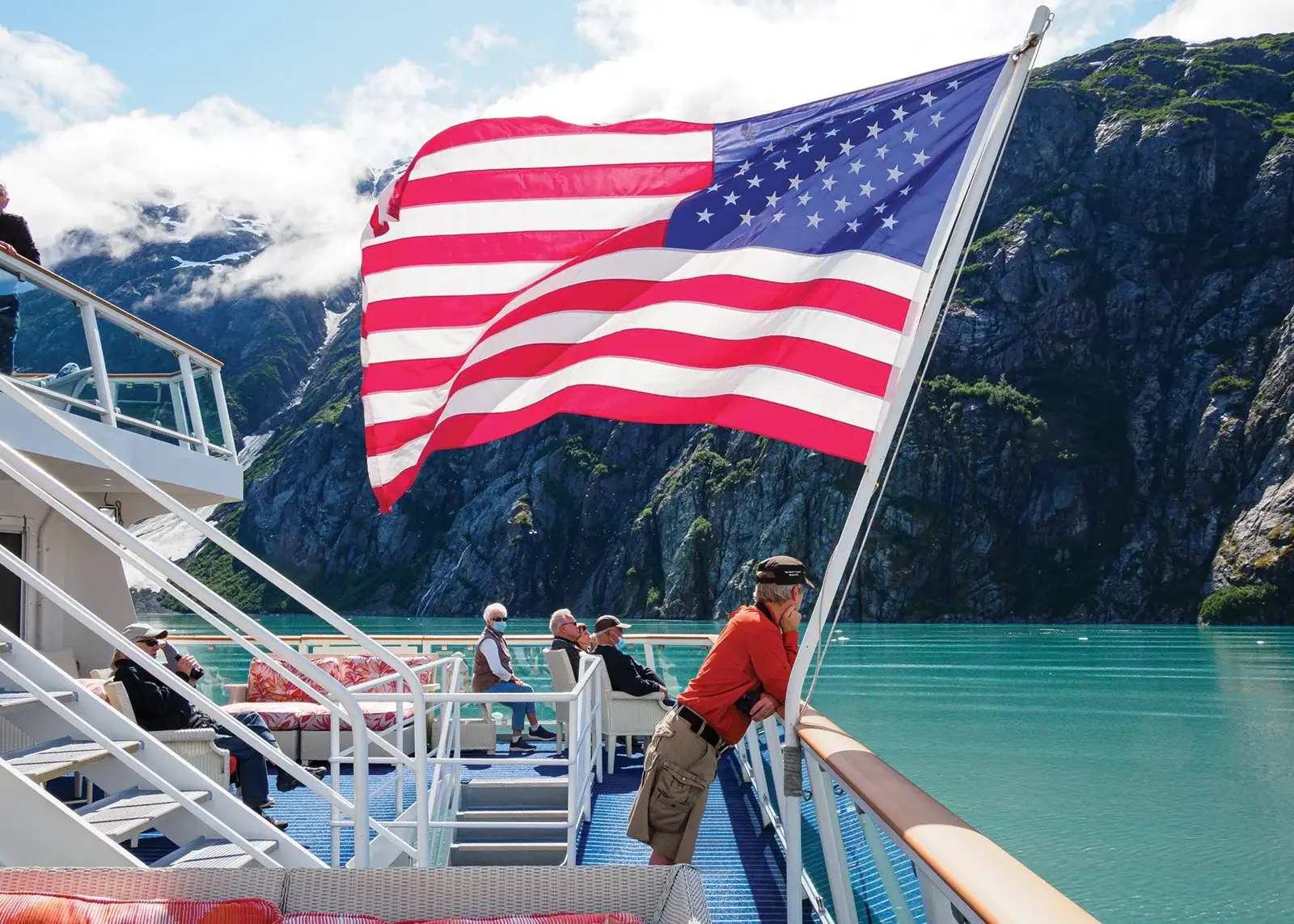
Clothing gets most of the attention, but the items that actually save a trip are usually the small ones packed at the bottom of the bag. These are the Alaska cruise essentials that experienced travelers say they’d never sail without.
Documents and Money
Bring your travel documents, a form of ID, and a mix of cash and cards for small ports where card readers aren’t always reliable. If your sailing is a round-trip departure from a U.S. port, it may qualify as a cruise that doesn’t require a passport, though it’s worth confirming your specific itinerary since not every Alaska sailing qualifies.
Motion Sickness and Personal Medication
Alaska’s inside waters are generally calmer than open ocean, but pack nausea relief anyway, especially if any part of your route crosses more open water. Bring enough personal prescriptions to last the full trip plus a few extra days in case of travel delays, and keep them in a carry-on rather than a checked bag.
Dry Bag for Your Phone and Electronics
Rain and boat spray show up without much warning on tender rides and shore excursions. A simple dry bag keeps your phone, wallet, and camera protected without adding real weight to your daypack, and it works just as well tossed into a larger backpack.
Sun Protection
High-SPF sunscreen and lip balm matter even under Alaska’s cloud cover, since UV rays reflect strongly off water and glacier ice. Sunglasses help on the bright days that catch first-timers by surprise, particularly during scenic cruising.
A Small First-Aid Kit
Band-aids, blister treatment, antiseptic wipes, and basic pain relievers cover most minor scrapes from hiking excursions. It takes up almost no space and saves a trip to the ship’s medical center for something small.
Something for Downtime
Sea days and evenings in the cabin add up over a week, so pack a book, a loaded tablet, or a deck of cards. Earplugs also help if you’re a light sleeper and your cabin sits near an elevator or a busy hallway.
Travel Insurance Paperwork.
If you booked trip insurance, print or save a digital copy of your policy details before you leave home. Alaska’s remote ports mean medical care and emergency transport can be limited, and having your policy on hand simplifies things if you ever need it.
A Basic Power Strip or Multi-port Charger.
Cabin outlets are often limited to one or two per room, and a group traveling together can easily have four or five devices charging at once. A small power strip or multi-port charger keeps everyone’s phone and camera batteries topped off without a nightly outlet negotiation.
Choosing Your Route
Some itineraries prioritize extra port time along the Inside Passage, while others build in a full day of scenic cruising instead. Comparing an Inside Passage vs Glacier Bay itinerary ahead of time can help you gauge how much wildlife-viewing gear, like binoculars and a zoom lens, actually earns space in your bag.
Once these basics are packed, the rest of your list is really about matching clothing to your ship and your itinerary length.
What to Wear on an Alaskan Cruise

What to wear on an Alaskan cruise comes down to one habit: layering. Alaska cruise attire isn’t about one perfect outfit, it’s about pieces that stack and peel off as the day changes.
Layering for Daytime Wear
Start with a base layer, add a fleece or lightweight sweater, and top it with a waterproof shell. Several travelers who’ve done this route recommend technical long johns and a light packable down layer under a Gore-Tex style shell for the coldest mornings, then peeling down to just the base layer once the sun comes out.
A fleece vest is worth calling out on its own. It fills the gap between a light long-sleeve shirt and a full jacket, which matters on the mornings that start cool and warm up fast by midday.
Evening Attire and Dress Codes
Alaska cruise dress codes tend to run more relaxed than a typical Caribbean sailing. A nice pair of pants or a casual dress works for most dinners, and even self-described “formal nights” on Alaska itineraries skew more casual than travelers expect.
Pack one slightly dressier outfit for that one evening rather than a full formalwear rotation.
Footwear for Ports and Excursions
Waterproof shoes or boots handle wet decks and muddy trails, while a second, lighter pair gives your feet a break once you’re back on board. Travelers who’ve sailed this route more than once often mention bringing an extra pair specifically because one pair getting soaked on an excursion is close to guaranteed.
Dresses and Skirts for Port Days
Women packing for this trip often ask whether dresses and skirts still make sense here. They do for evenings and warmer port afternoons, but pair them with tights or leggings and a cardigan you can add the moment the wind picks up on deck.
Cabin Loungewear
A comfortable pair of pajamas or joggers makes a real difference after a long day of layering up and down. A robe or light cover-up is handy if your cabin includes a hot tub or you’re headed to a pool deck.
Accessories for Changing Weather
A few accessories round things out:
- Packable Rain Poncho: A backup layer for your daypack on days when the forecast turns quickly.
- Sun Hat with a Tie: Useful on bright days, and the tie keeps it from blowing off on deck.
- Lightweight Gloves: Thin enough for photos, warm enough for a windy scenic cruising day.
- Wool Scarf or Neck Gaiter: Doubles as a layer around your neck or pulled up over your ears.
- Compact Travel Umbrella: A small, sturdy umbrella backs up your rain jacket on days with steadier rain rather than passing showers.
Pack a couple of these accessories even if the forecast looks mild, since Alaska’s weather can shift faster than a typical trip.
What to Pack for an Alaska Cruise by Month

Alaska cruise season runs roughly May through September, and each month brings a different mix of temperature, daylight, and rainfall. Building your list around your sail month keeps you from overpacking or getting caught without the right gear.
Shoulder season sailings in May and September tend to run cooler and quieter, with fewer ships in port and lower prices on land excursions. Peak season in June, July, and August trades some of that quiet for longer daylight hours and generally milder afternoons, though rain stays a possibility across every month on this list.
Packing for an Alaska Cruise in May
May kicks off the season with fewer crowds and cooler temperatures, often in the 50s. Rain is common, so a solid waterproof shell and wool socks earn their space early in the trip. Pack a warm layer for morning scenic cruising, since temperatures haven’t caught up to peak summer yet, and don’t rule out a beanie for early departures.
Packing for an Alaska Cruise in June
Long daylight hours define this month, with some days holding onto light for close to 18 hours. Travelers researching what to wear in Alaska in June consistently mention a sleep mask, since the extended daylight can make it hard to fall asleep in a bright cabin. Sunglasses and a sun hat also get more use as June tends to bring clearer skies, and afternoons can climb into the 60s and low 70s in some ports.
Packing for an Alaska Cruise in July
July often runs the warmest of the season, with afternoons reaching the 70s or higher in some ports. Anyone packing for what to pack for an Alaskan cruise in July should still bring a rain jacket, since warmer days come with a higher chance of scattered showers. Shorts and short sleeves earn a spot in the bag alongside your usual layers, and this is also peak season for mosquitoes on land excursions, so a small bottle of insect repellent is worth the space.
Packing for an Alaska Cruise in August
August tends to bring more rain and slightly cooler temperatures as summer winds down. Following the usual advice for what to bring on an Alaskan cruise in August, prioritize waterproof jackets, pants, and bags over lighter summer pieces. A couple of warm sweaters help for cooler evenings on deck, and this is a month where a dependable rain shell earns its keep more than any other single item.
Packing for an Alaska Cruise in September
September closes out the season with colder days, fewer travelers, and better odds of animal migration sightings and northern lights viewing. Most guidance on what to wear in Alaska in September points toward heavier jackets, wool sweaters, and warm gloves. Bring binoculars, since wildlife viewing tends to pick up as the season winds down, and pack for evenings that can dip close to freezing on the water.
Yellow Umbrella Travel: Planning Your Alaska Cruise with Confidence

Picking the right ship comes before packing for it. As a trusted travel agency, we match travelers and groups to the ship size, itinerary, and cabin category that actually fits how they want to experience Alaska. We will help you figure out anything you would like to know about your cruise, including what you would need to pack.
As certified Viking Experts, American Cruise Lines Specialist, and ASTA members, we bring all that knowledge to plan your perfect journey. We work with multiple cruise lines, not one, so the ship we recommend is based on your group, not a single line’s brochure. So if we notice a Viking cruise suits you better than an American Cruise Lines itinerary, we will make sure you know that.
Our planning services are complimentary, which means you will pay the same price as booking directly on your own.



Alaska Cruise Packing Guide FAQs
What not to pack for an Alaska cruise?
Skip an entire suitcase of summer-only clothing, since even the warmest months bring cool mornings and evenings. Heavy formal wear beyond one nicer outfit is also unnecessary, since Alaska dress codes run more relaxed than other cruise regions, and cotton jeans that take forever to dry after a wet excursion are worth leaving at home too.What do most people forget to bring on a cruise?
A dry bag for phones and cameras is one of the most commonly forgotten items, along with a backup pair of shoes. Lip balm and a portable phone charger also get left behind more often than travelers expect, along with a reusable water bottle for long excursion days.What are the must-haves for an Alaska cruise?
A waterproof shell, wool socks, layering pieces, and binoculars cover most of what a first-time traveler needs. Personal medication, a dry bag, and a small first-aid kit round out the list of true essentials for most itineraries.Do you need a passport for an Alaska cruise?
It depends on your itinerary. Round-trip sailings from a U.S. port sometimes qualify as closed-loop cruises that don’t require a passport, though every itinerary is different, so it’s worth confirming yours directly.How many suitcases should I bring on an Alaska cruise?
One checked bag and one carry-on is usually enough for a seven-day sailing, especially if you’re leaning on layers instead of packing a full outfit for every day. Smaller expedition-style ships have less closet space, so a lighter bag makes cabin life easier.Is it cold on an Alaska cruise in the summer?
Summer temperatures generally run in the 50s to 70s, but mornings, evenings, and glacier viewing days can feel noticeably colder. Packing layers matters more than packing for one specific temperature.Should I bring a formal outfit for an Alaska cruise?
One nicer outfit is usually enough, since Alaska sailings tend to run more casual than a typical Caribbean or Mediterranean cruise. A dressier top or a sport coat over your existing layers covers most onboard evenings without needing a full formalwear rotation.What’s the best type of luggage for an Alaska cruise?
A mix of one checked bag and a smaller daypack works well for most travelers, with the daypack doing double duty for excursions. If your ship is a smaller expedition-style vessel with limited closet space, a soft-sided duffel is often easier to store than a large hard-shell suitcase.Do I need special gear for glacier viewing or wildlife excursions?
Binoculars and a camera with some zoom capability cover most glacier and wildlife viewing, since sightings usually happen at a distance. For land-based wildlife excursions, closed-toe waterproof shoes and a warm layer matter more than any specialized equipment.What should first-time cruisers know before booking an Alaska cruise?
Ship size changes the experience more than most first-timers expect, so it’s worth thinking through whether you want a bigger ship’s amenities or a smaller ship’s closer access to wildlife and glaciers before booking. It’s also worth building a little flexibility into your pre-cruise and post-cruise travel days, since weather can occasionally shift port schedules.Are You Ready for Your Alaskan Cruise?
 Alaska rewards travelers who pack for change rather than for one forecast, since a single day can move from a sunny pier to a windy glacier deck and back again. Building your bag around layers, a solid rain shell, and a few smart accessories covers nearly every version of the trip.
Yellow Umbrella Travel has been planning group travel for nearly two decades from our home base in New Braunfels, Texas, and we never charge a planning fee since the cruise line pays us directly. Reach out anytime at cheryl@yellowumbrellatravel.com, and we’ll help you find the right Alaska itinerary for your group before you even start packing.