Antarctica Expedition Cruises: The Trip That Changes Everything Else
Roughly 50,000 people visit Antarctica each year. For context, 13 million visit Paris. The people who have been to Antarctica tend to describe it the same way: as the most extraordinary thing they have ever done, a place that reorganizes your sense of the world so completely that everything else gets measured against it afterward. We plan Antarctica sailings for groups and individuals. We know every ship, every itinerary, and every season. And we will tell you honestly which combination is right for you.
One thing worth knowing before you go any further: you do not have to cross the Drake Passage to get there. If the idea of two days of open ocean sailing has been the reason you have not booked yet, read on. There is another way.
A quick understanding
What You Need to Understand About Antarctica Before You Book Anything
An Antarctica expedition cruise is not a cruise in the standard sense of the word. There is no formal dining dress code, no Broadway-style entertainment, no structured itinerary printed in advance and followed regardless of conditions. Antarctica does not work that way, and the best expedition lines do not pretend otherwise.
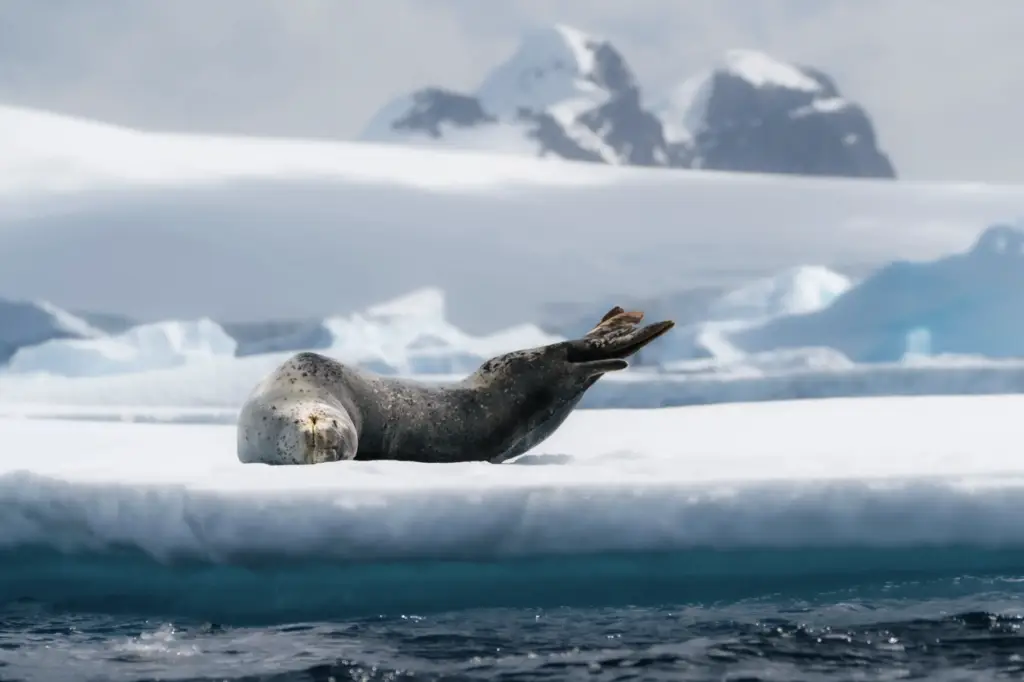
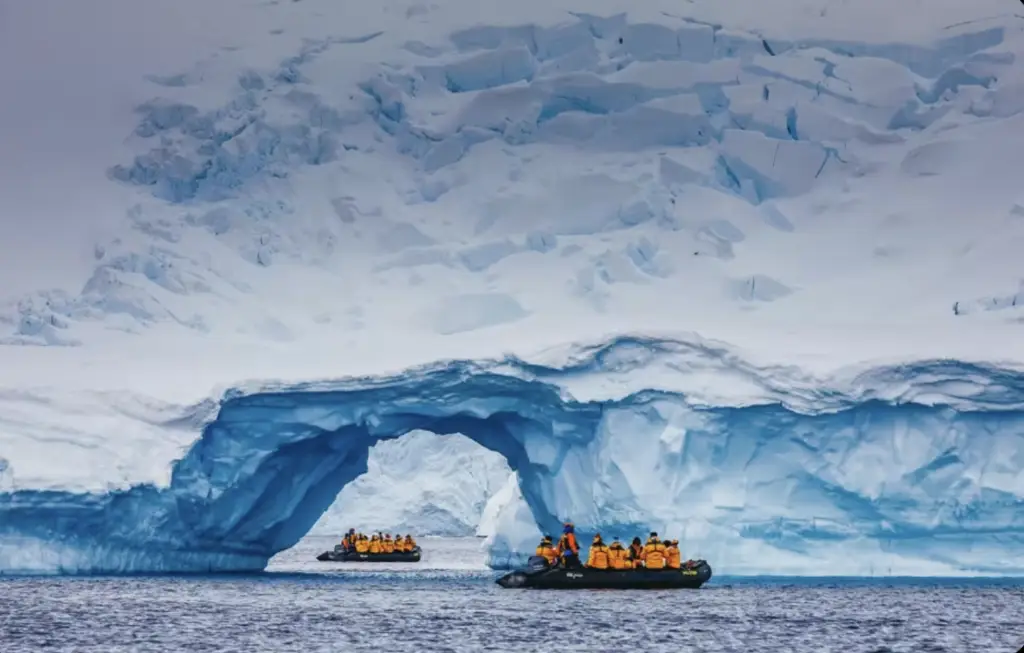
What you have instead is a purpose-built ship, small enough to access bays and inlets that larger vessels cannot reach, carrying a team of scientists, naturalists, glaciologists, ornithologists, and expedition leaders who have spent careers in this part of the world. Every day brings one or two Zodiac landings on the Antarctic Peninsula, where you step ashore onto a continent that covers 5.4 million square miles and has no permanent human population. The wildlife exists in a density and an approachability that has no equivalent anywhere else on earth. The animals did not evolve with land predators. They are not afraid of you. They are curious about you, which produces encounters that no wildlife documentary quite prepares you for.
The ships themselves have transformed significantly in recent years. Purpose-built expedition vessels like Seabourn Venture, National Geographic Endurance, and the Scenic Eclipse ships offer staterooms and amenities indistinguishable from a luxury hotel, submarines for underwater exploration, onboard science centers, multiple dining venues, and wine lists that would not embarrass a serious restaurant.
what makes them different
The Antarctic Seasons
November: Opening season
The continent emerges from winter. Snow conditions are at their freshest, which means the landscapes are at their most dramatic and pristine. Penguin courtship behavior is at peak activity. Passenger volumes are at their lowest, which means more space on landings and a more intimate experience ashore. The light in November has a particular quality: long days, low sun angles, and photography conditions simply not available at any other time of year.
December and January: Peak season
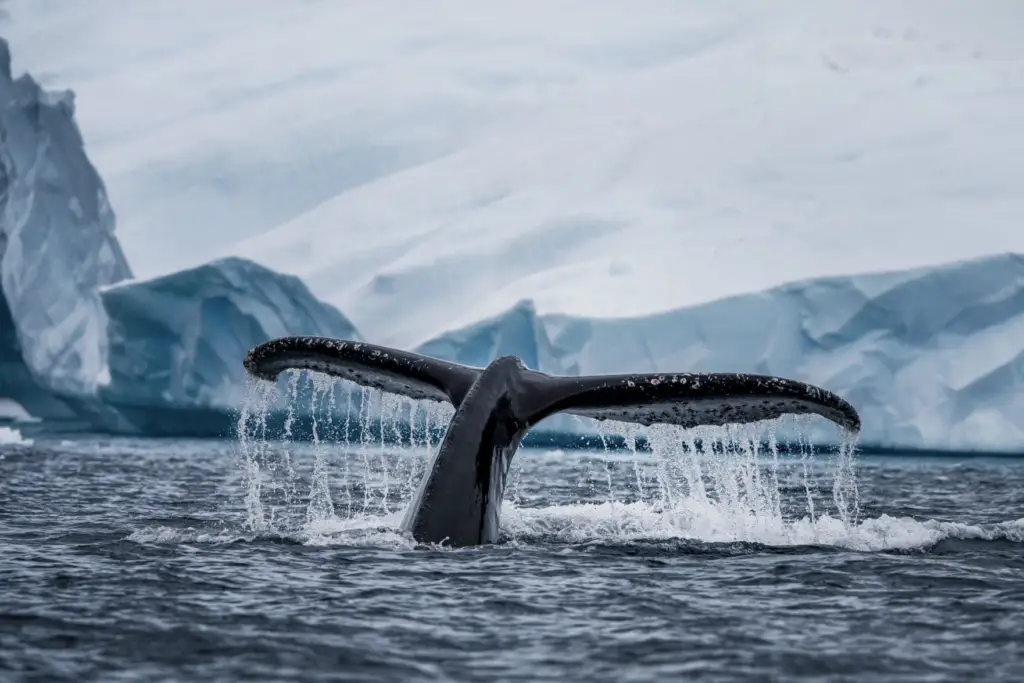
The midnight sun means days that do not end. Penguin eggs hatch in December, and by late December and January the colonies are full of chicks. January is whale season: humpbacks, minke, and orca are all frequently sighted. The weather is at its most stable. Passenger volumes are at their highest, which means the most departure options. For first-time visitors who want the full wildlife experience and the most departure flexibility, this is the most popular window for good reason.
February and March: Late season
The chicks are growing and the colonies are loud with activity. Whale populations peak in February. The sea ice begins to break up, opening access to areas of the peninsula not reachable earlier in the season. Passenger volumes begin to decline after the school holiday period, which means slightly more space on landings.
Drake Passage vs Fly Option: Which Is Right for You?
The Drake Passage
The Drake Passage has kept more people from booking Antarctica than almost any other single factor. Two days of open ocean sailing each way, through some of the roughest water on earth, is a real consideration for travelers with motion sensitivity, for those with limited time, and for anyone who has simply decided that the crossing is not part of the experience they want. The fly-cruise option removes it entirely.
For many travelers, the Drake Passage is part of the point. The two days of crossing in each direction are part of the transition, a preparation for what you are entering. Onboard scientists and naturalists use the crossing for lectures, wildlife spotting, and extended conversation. The sense of arrival, after two days at sea, when the first icebergs appear on the horizon, is described by almost everyone who has done it as one of the most powerful moments of the entire trip.
The fly option involves a charter flight from Punta Arenas in Chile to King George Island in the South Shetland Islands, where the ship is waiting. The flight takes approximately two hours and eliminates the Drake Passage entirely. Several lines offer this option: Silversea operates flights to King George Island and is about to open a new 150-room hotel in Puerto Williams, Chile called The Cormorant at 55 South, allowing guests to spend a night in Chilean Patagonia before flying south. Quark also operates a fly-cruise option from Punta Arenas.
Our honest guidance: if you want to do the Drake, do the Drake. But if the fly option is what makes Antarctica possible for you, take it without hesitation. The destination justifies any approach.
The fly option
Which Antarctica Cruise Line Is Right for You
Lindblad Expeditions with National Geographic
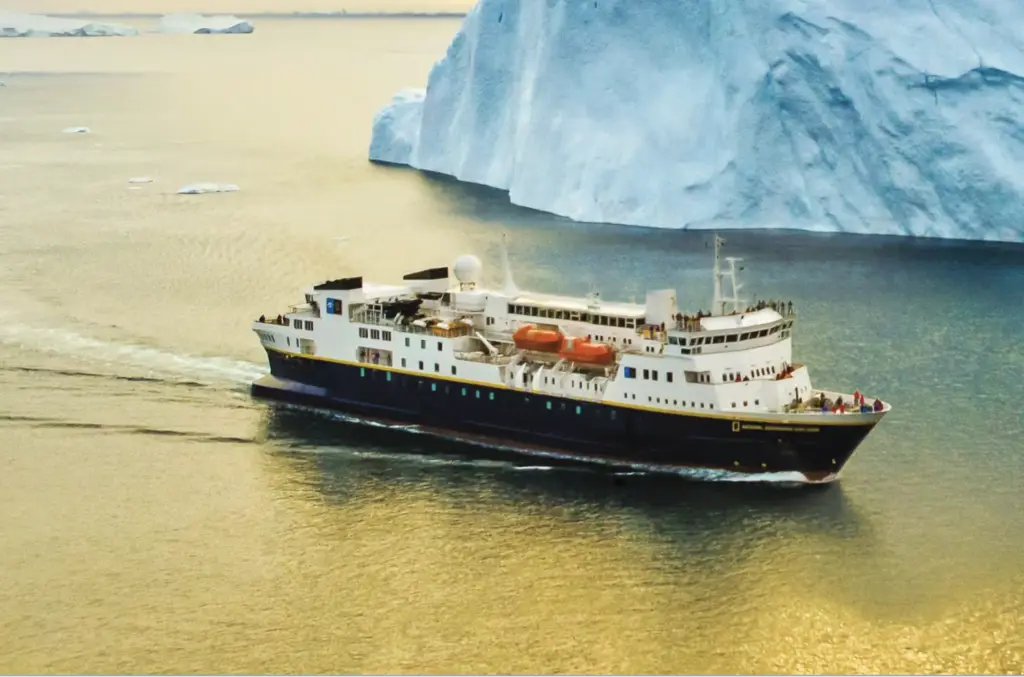
Lindblad pioneered civilian travel to Antarctica in 1966 and has been doing it longer than anyone else. Their two dedicated Antarctica ships, National Geographic Resolution and National Geographic Endurance, are Polar Class 5 vessels carrying 138 guests. Every sailing includes a National Geographic photographer and a Lindblad photo instructor. The naturalist team is outstanding and the onboard science program is the most rigorous of any line operating in this price range. Per person range: approximately $10,000 to $20,000 depending on cabin category and itinerary.
Quark Expeditions
Quark goes further south than almost any other operator, regularly crossing the Antarctic Circle to destinations that most lines never reach. Their adventure program is the most comprehensive in polar expedition cruising: mountaineering on Antarctic slopes, camping on the ice overnight, kayaking in polar waters, snowshoeing across the Peninsula. The purpose-built Ultramarine carries helicopters in addition to a full Zodiac fleet, opening landing options unavailable to ships without that capability. Per person range: approximately $10,000 to $22,000.
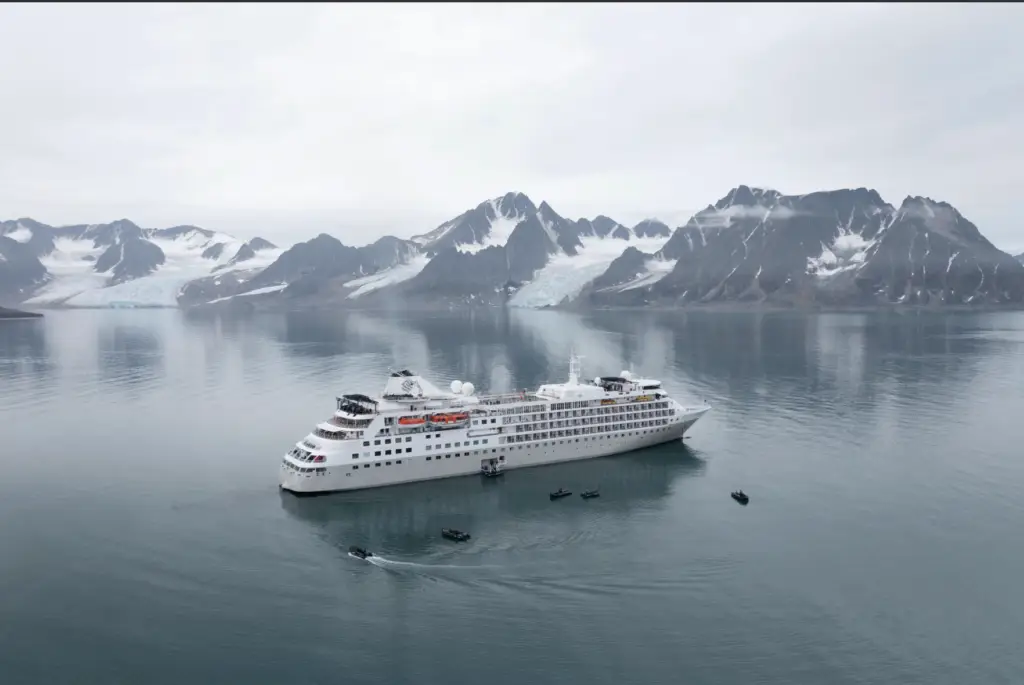
Silversea Expeditions
Silversea brings its ultra-luxury all-inclusive product to the Antarctic Peninsula on three expedition ships: Silver Cloud Expedition, Silver Wind, and Silver Endeavour. Butler service. Multiple dining venues. Premium spirits and wine included. The Silver Endeavour carries 200 guests in some of the most spacious expedition staterooms available. For guests who are not willing to compromise on the onboard experience, Silversea is the answer. Per person range: approximately $15,000 to $35,000 depending on suite category and itinerary.
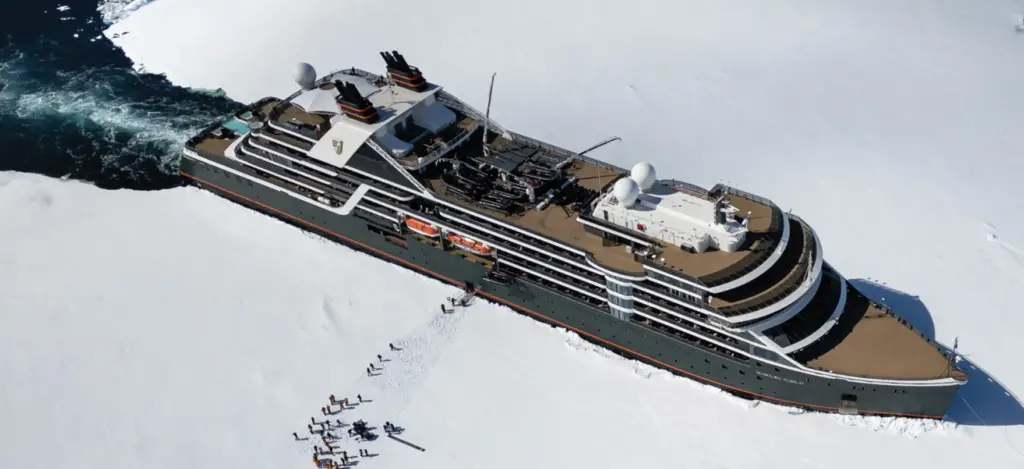
Seabourn Expedition
Seabourn Venture and Seabourn Pursuit are among the newest expedition vessels in the world. Each carries fewer than 300 guests, includes two submarines for underwater exploration, and offers a comprehensive excursion program. The submarine program is a genuine differentiator: few travelers in the world have been below the surface of the Southern Ocean, and for the right group, that dimension of the experience is worth the conversation on its own. Per person range: approximately $15,000 to $40,000.
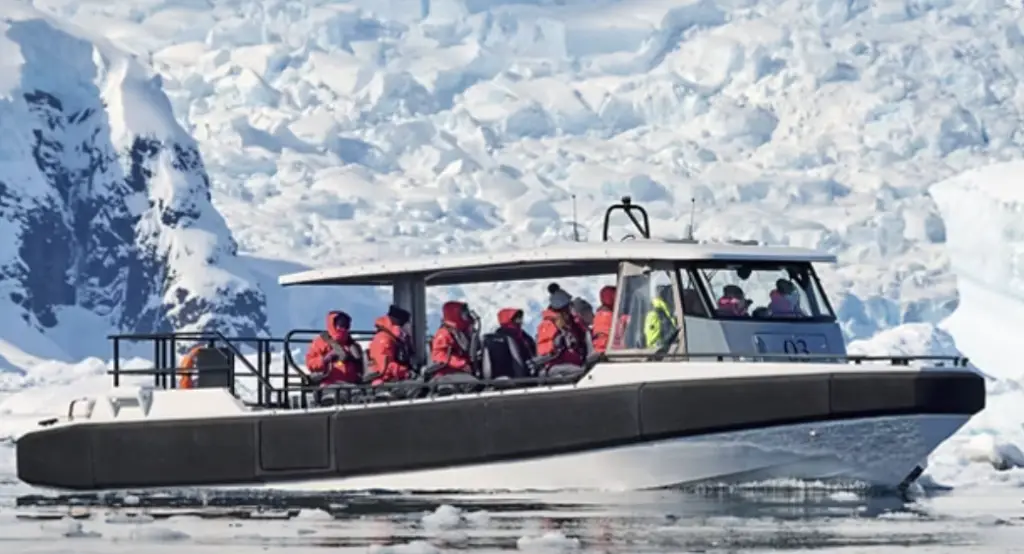
Viking Expeditions
Viking Octantis and Viking Polaris are Polar Class 6 expedition ships carrying 378 guests each, purpose-built for Antarctica and the Arctic. Both ships carry two submarines, a fleet of Zodiacs, kayaks, and two high-speed special operations boats. NOAA scientists sail on every Antarctic voyage, leading onboard lectures and field research that guests can participate in directly. For the traveler who loves the Viking river cruise product and wants to apply its all-inclusive, intellectually engaged approach to Antarctica, the Viking expedition ships are the natural extension. Itineraries include the 13-day Antarctic Explorer departing from Buenos Aires, as well as an extraordinary 87-day Pole-to-Pole itinerary. Per person range: approximately $14,000 to $22,000.
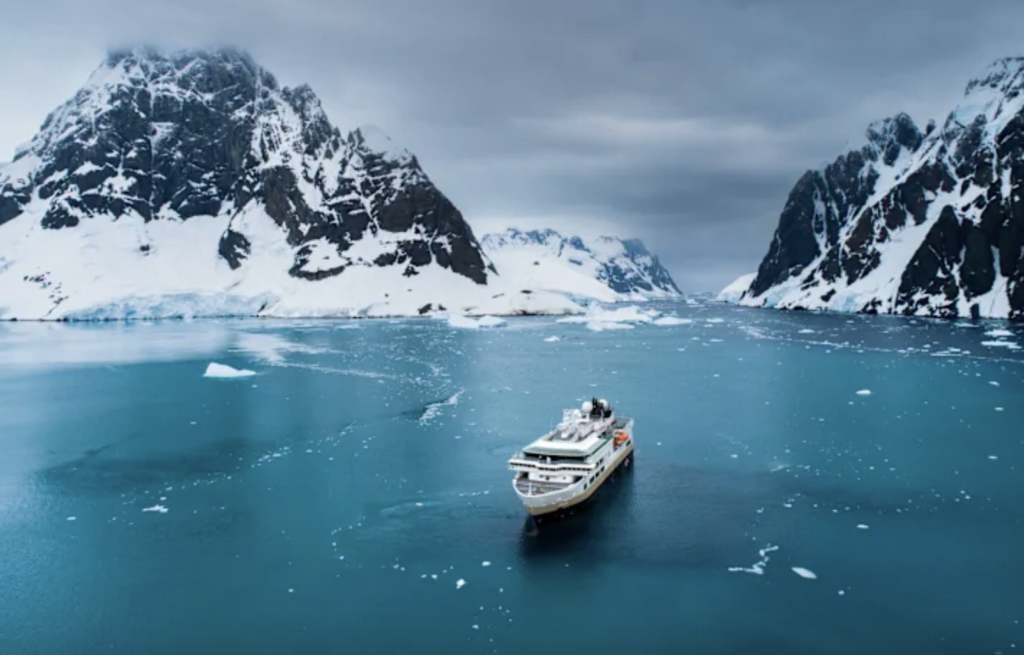
Hurtigruten Expeditions (HX)
Hurtigruten has been running expedition voyages to Antarctica since before the category had a name, and the depth of knowledge their expedition teams bring reflects that history. Their ships carry a science center where guests can contribute to citizen science projects. The onboard experience is comfortable rather than ultra-luxury. For guests who want a genuine polar expedition without paying the premium of Silversea or Seabourn, Hurtigruten delivers the real thing at a meaningfully lower price point. Per person range: approximately $10,000 to $16,000.

Scenic Eclipse
The Scenic Eclipse ships are Discovery Yachts carrying 228 guests that look more like private superyachts than expedition vessels. They carry two helicopters, a six-passenger submarine that dives to 300 meters, twelve Zodiacs, and a staff-to-guest ratio approaching one to one. Eight restaurants. Butler service in every suite. For guests who want the most extraordinary expedition ship in existence, Scenic Eclipse is the answer. Per person range: approximately $20,000 to $50,000.
What You Need to Know Before You Book
The booking window matters more in Antarctica than almost anywhere else. The best cabins on the most sought-after Antarctic departures sell twelve to eighteen months in advance. December and January peak-season sailings on Silversea, Viking, and Seabourn regularly sell out at that lead time. For groups, securing cabin blocks requires moving earlier than individual bookings.
Physical preparation is honest but not extreme. Antarctica requires a level of physical readiness that a European river cruise does not. Daily Zodiac landings involve boarding and disembarking a small inflatable vessel in open water, walking on uneven rocky or icy terrain, and spending time outdoors in cold and sometimes wet conditions. Most expedition cruise guests are active adults comfortable walking a few miles on varied terrain. You do not need to be an athlete. You do need to be honest with yourself and with us about any physical limitations.
What We Manage for Your Antarctica Group
Cruise line and itinerary selection. Before we recommend anything, we want to know who is traveling, what they are hoping to experience, whether the Drake Passage is something they want to do or something they want to avoid, and what their physical activity level and comfort with cold and wet conditions is.
Cabin block securing. Antarctica sailings sell twelve to eighteen months in advance. We secure your group’s cabin block, ideally before individual booking opens.
Individual guest coordination. Every participant receives their own booking confirmation, payment schedule, and comprehensive pre-departure briefing including packing guidance, physical preparation recommendations, and honest information about what to expect from the Drake Passage and Zodiac landings. Arriving unprepared is the most common reason guests feel overwhelmed on Antarctica sailings. We make sure no one in your group arrives unprepared.
Gear guidance. Antarctica requires specific clothing and equipment. We send every guest a detailed packing list well before departure, including specific recommendations for base layers, waterproof outerwear, and footwear that works for Zodiac landings and shore walks.
Travel insurance coordination. Antarctic expedition travel requires insurance that specifically covers emergency medical evacuation from a remote location. Standard travel insurance policies often do not include this coverage. We guide every guest through the right policy for the specific itinerary before departure.
Antarctica Expedition Cruise Pricing: What to Expect
Antarctica expedition cruise fares range from approximately $10,000 to $30,000 or more per person depending on the cruise line, cabin category, itinerary, and duration. Entry-level expedition berths on Hurtigruten start at the lower end of the range. Standard expedition cabins on Quark and Lindblad typically run $10,000 to $18,000 per person for a ten to fourteen-night sailing. Silversea and Seabourn start around $15,000 to $20,000 per person for comparable itineraries. Scenic Eclipse, with its helicopter and submarine access, is at the highest end of the market.
We provide specific, detailed pricing for any itinerary we recommend before anyone commits to anything.
What People Ask Us Most About Antarctica Expedition Cruises
Every window between November and March is extraordinary. November offers the freshest snow conditions, peak penguin courtship behavior, and the lowest passenger volumes. December and January offer the midnight sun, penguin chick hatching, and peak whale activity. February and March offer the best whale sightings, breaking sea ice that opens new areas, and declining crowds. The best window depends on what matters most: if wildlife breeding behavior is the priority, November through December is the answer. If whales are the priority, February is the answer.
Antarctica expedition cruising is not extreme adventure travel, but it is not passive travel either. Zodiac landings involve boarding and disembarking small inflatable boats in cold and sometimes wet conditions. Landings ashore typically involve walking on uneven terrain for one to four hours. Most expedition cruise guests are active adults who are comfortable walking several miles on varied terrain.
It depends entirely on conditions, which are not predictable in advance. At its roughest, the Drake involves swells of eight to ten meters and conditions that make moving around the ship challenging. At its calmest, it can be relatively smooth. Modern expedition ships are designed and stabilized for these conditions. Seasickness medication is recommended for most guests regardless of prior sea experience.
The Drake Passage involves two days of open ocean sailing in each direction between Ushuaia and the Antarctic Peninsula. The fly option involves a two-hour charter flight from Punta Arenas to King George Island, eliminating the Drake entirely. The fly option is available on Silversea and Quark and adds approximately $1,500 to $3,000 per person to the fare. For guests with motion sensitivity or very limited time, the fly option is worth serious consideration.
Twelve to eighteen months is the right planning window for the best cabin selection on the most sought-after ships and itineraries. The best cabins on Seabourn, Silversea, and Lindblad in peak December and January windows sell well before the twelve-month mark. For groups specifically, earlier is always better. We have seen groups lose their preferred sailing because they waited until ten months out.
Yes. We are compensated by the expedition lines when your group sails. There are no planning fees, no booking surcharges, and nothing hidden. The first conversation costs nothing and commits you to nothing.
You have been thinking about this long enough.
Tell us when you want to go, who is traveling, and what matters most to your group. We will tell you honestly which line, which ship, and which season is the right combination, and we will handle every detail from the first conversation to the moment your Zodiac lands on Antarctic ice for the first time.
Complimentary planning. No pressure. No fees.